
Your library, where it already lives
Grind reads the folders you already use. Nothing is moved, renamed or copied to a server.
Where it lives, who you sent it to, what came back, and what it earned.
Thousands of files in the folders you already use, read where they sit, named and tagged the way you would do it by hand if you had the time.
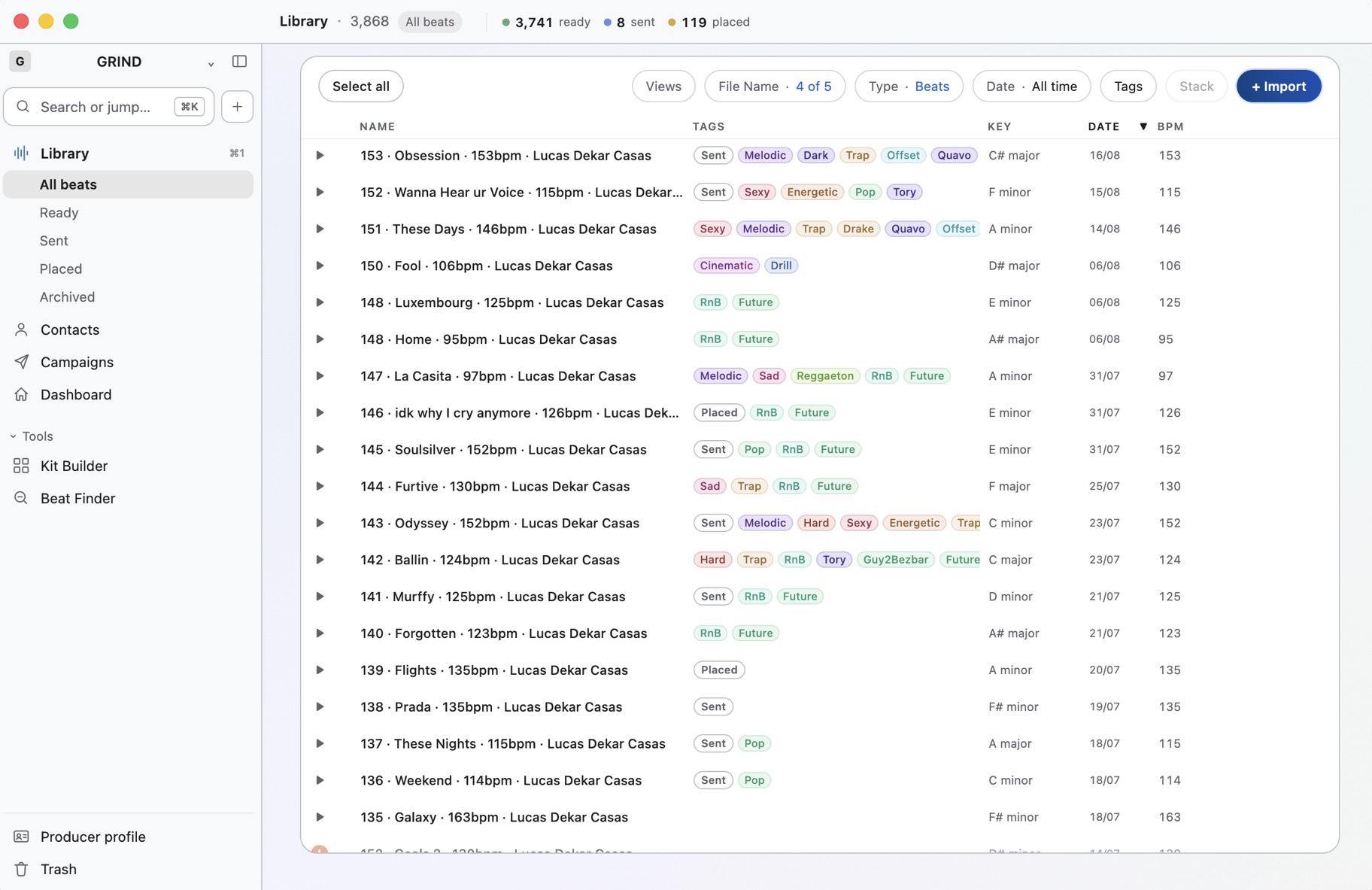
Grind reads the folders you already use. Nothing is moved, renamed or copied to a server.
Every beat is analysed on import. No spreadsheet, no filename conventions to remember.
Your own vocabulary. After enough examples Grind suggests genres, and never overwrites a tag you set.
Correct the tags across a whole selection at once, rather than one file at a time.
Grind spots the collaborators on a beat and keeps them on it, so a split conversation starts from a list.
Change what a beat is called inside Grind, without touching the file it was read from.
Drop an extract or a voice note. Grind compares the sound, not the filename, and ranks the matches in your library.
Kit Builder scans the samples inside your sessions, sorts them by type, and previews a groove before anything leaves the app.
From your own address, to your own contacts, and you know who opened it and who listened.
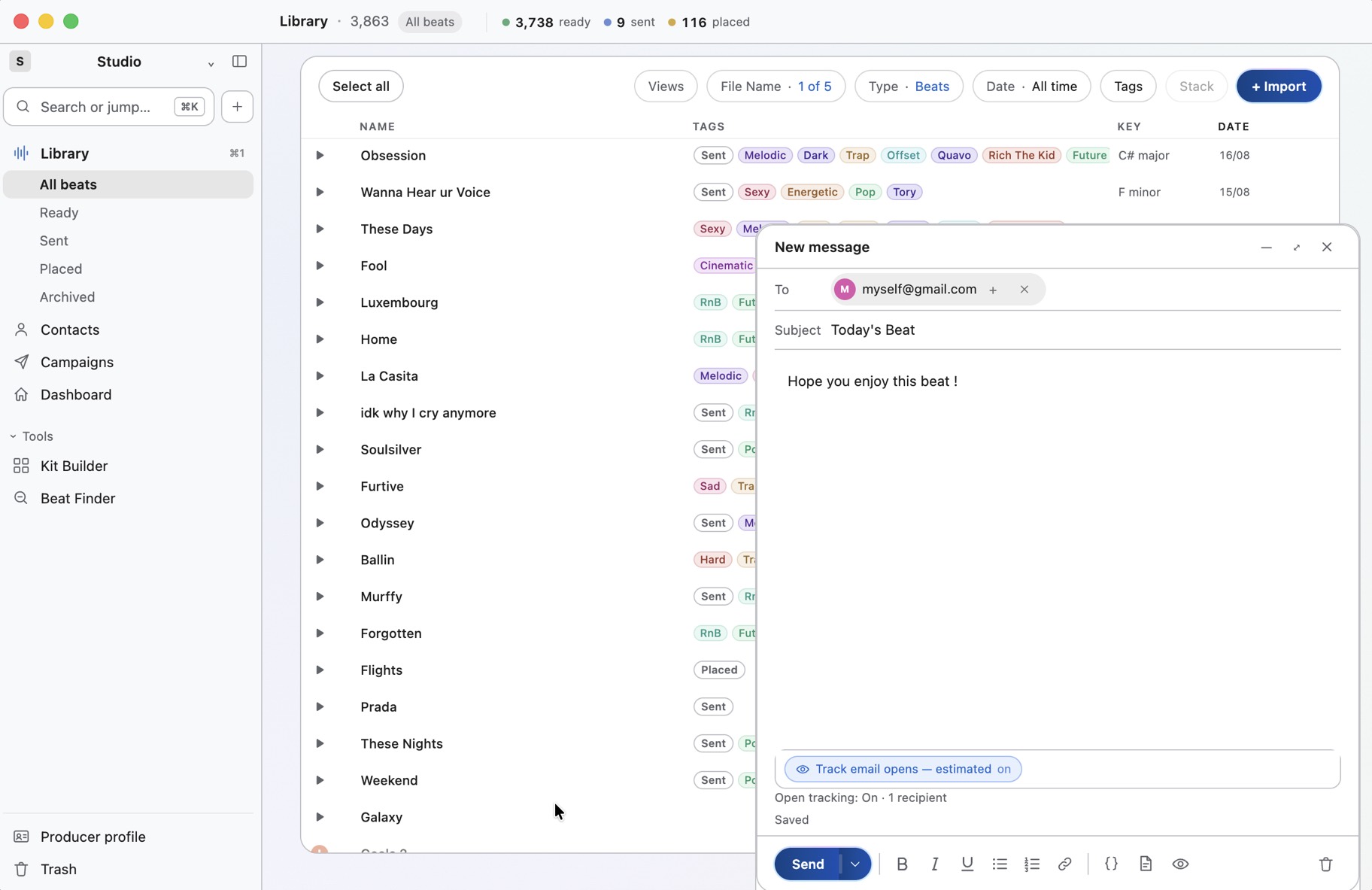
Build a pack, send it from your address, and keep the thread. Grind never messages an artist for you.
See which submissions were read, so a follow-up goes to the person who was actually interested.
The release finds the beat you sent, and brings its streams, its playlists and its certifications with it.
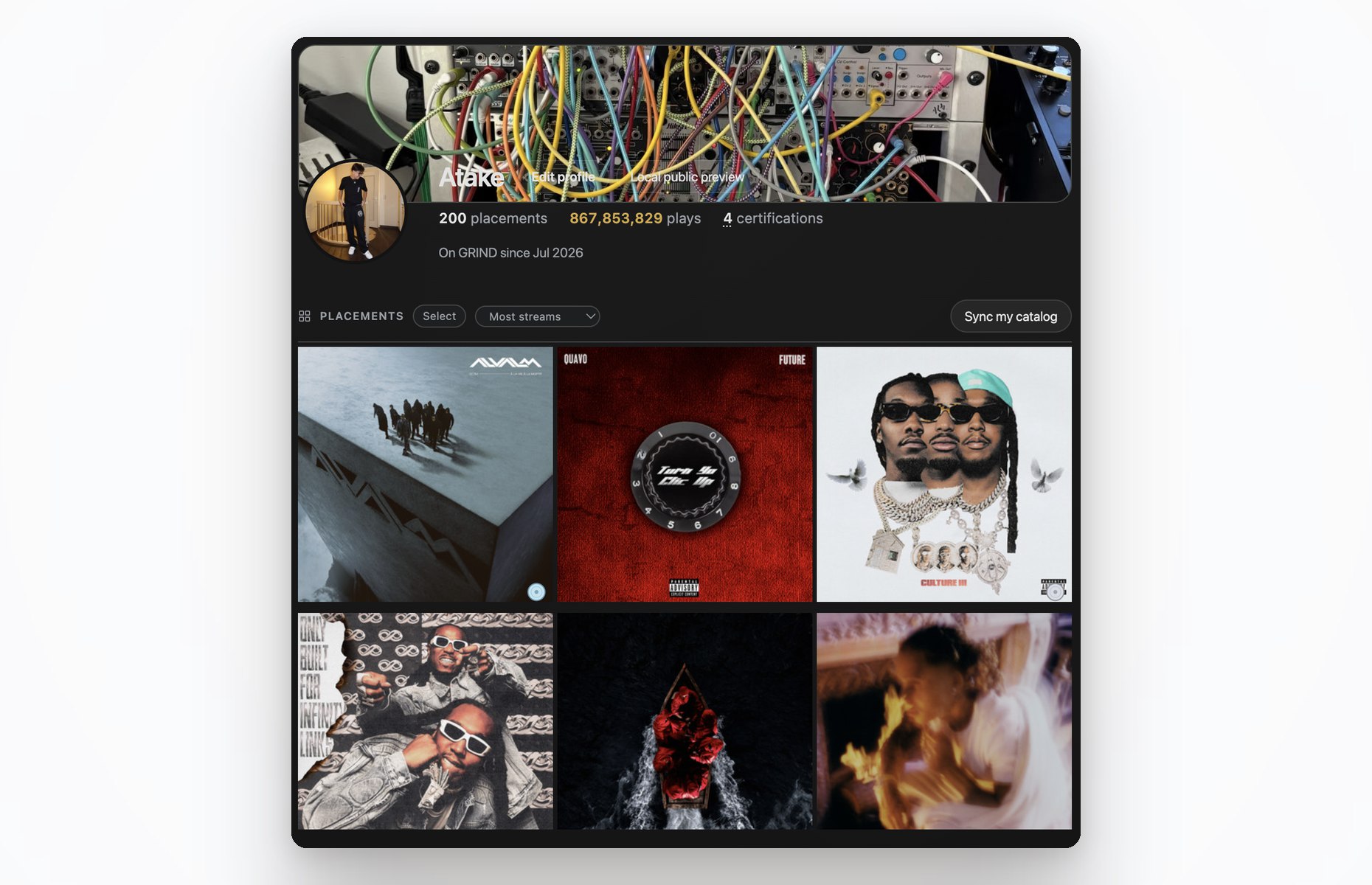
Grind matches releases back to the beat you sent, so a placement stops being something you hear about by accident.
Real numbers on each placement, sorted by what actually performed.
A page artists can look you up on, a visualizer for the feeds, and the paperwork filed with the beat.
Your placements and their real numbers, on one link you can send instead of a folder.
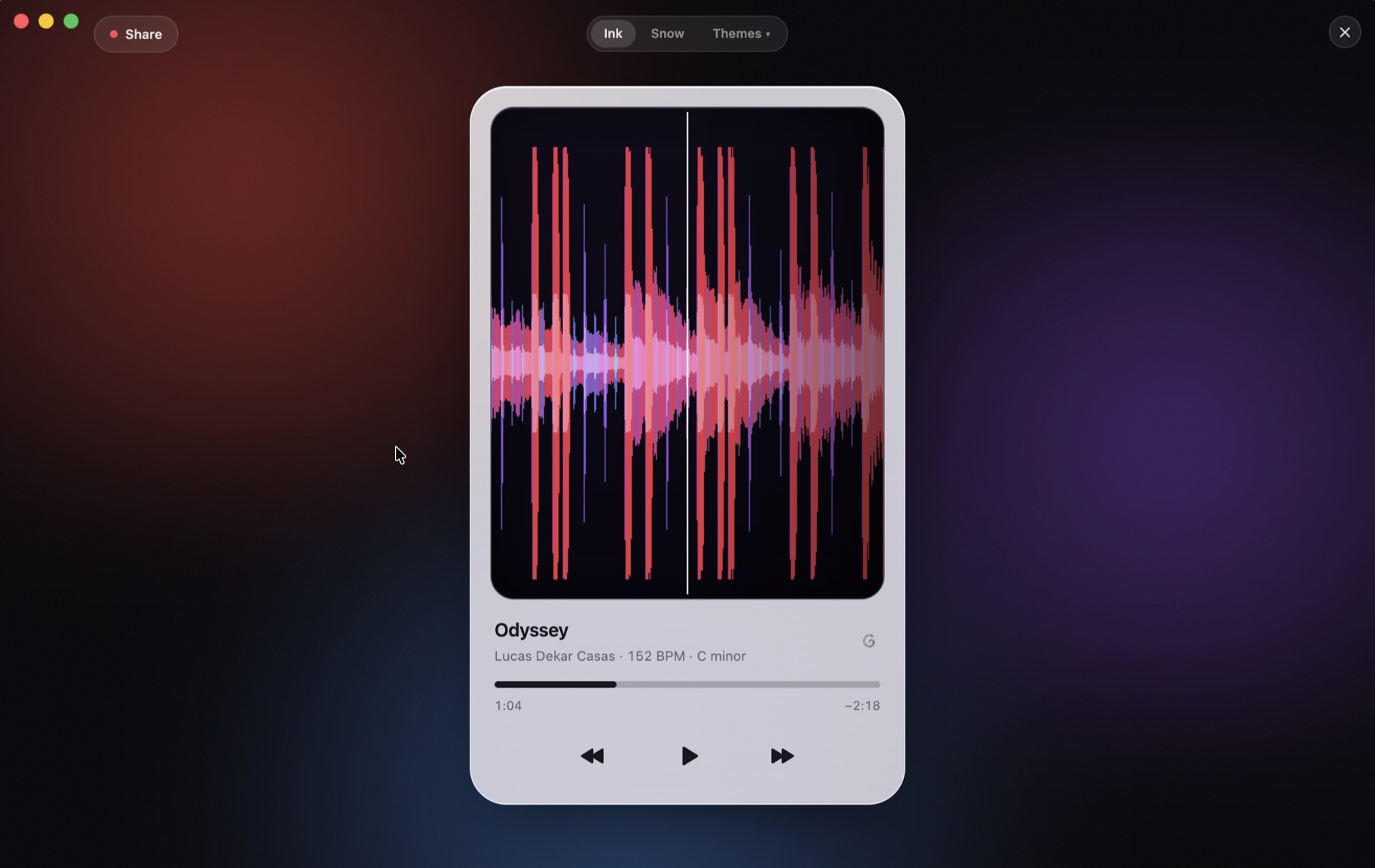
Turn any beat into a vertical visualizer for TikTok, Instagram and Shorts, in one click. 1080 × 1920, with the audio.
Attach a contract or a split sheet from a beat’s panel, and it stays with that beat rather than in a folder you will not find again.
Record your own share and each collaborator’s, so the numbers are on the beat when they are asked for.
Create an account and start testing Grind for free, in under a minute.